
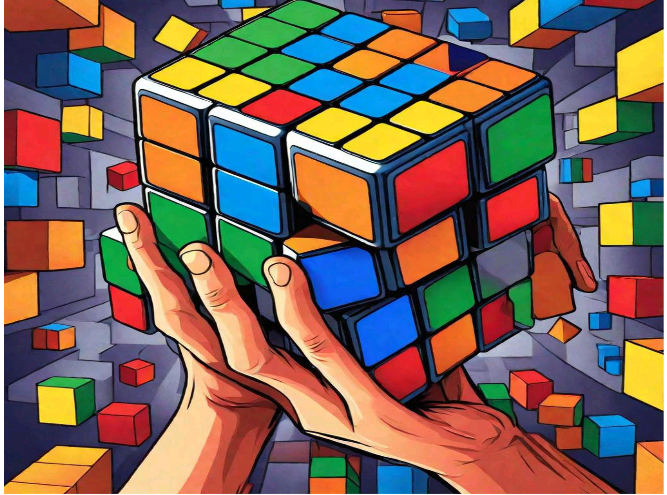
Why Puzzles Captivate Minds Worldwide
Introduction:
Welcome to our cosy corner dedicated to the fascinating world of puzzles. Moreover, puzzles, with their universal appeal, are more than just a pastime; they challenge our minds, spur our curiosity, and foster unexpected connections among us. From classic jigsaw puzzles adorning our grandparents’ coffee tables to the modern digital puzzles we solve during commutes, the realm of puzzles spans a diverse spectrum.

The Universal Allure of Puzzles
In this section, we will delve into the universal allure of puzzles, their evolution, and their profound impact on cognitive development. Whether you are a seasoned aficionado or a newcomer to this captivating realm, you will find something of interest here. Undoubtedly, puzzles pull us into a unique state of mind where focus meets fun. They challenge us to think differently, to apply logic and sometimes to think outside the box. For many of us, the satisfaction of placing that final piece, cracking the code, or solving that tricky clue isn’t just enjoyable; it’s downright exhilarating.
The Evolution of Puzzle Types
Moving on to the evolution of puzzle types, from ancient riddles inscribed on temple walls to the latest virtual escape rooms, puzzles have been a part of human culture across the globe. They’ve evolved in form and function, becoming more complex and engaging as our society has progressed. Consequently, this evolution has significantly enriched the experience of puzzle enthusiasts and introduced new dimensions to this timeless pastime.
The Role of Puzzles in Cognitive Development
Last but not least, we will explore the profound role of puzzles in cognitive development. Puzzles do more than entertain; they build our brains. Engaging in puzzle-solving activities from a young age can enhance problem-solving skills, improve memory, and even delay the onset of cognitive decline in older adults. Thus, it is evident that the cognitive benefits of puzzles extend beyond mere amusement, making them a valuable and enriching pursuit for individuals of all ages.
Transition and Subheadings

History and Evolution
Crossword puzzles first captured hearts in the early 20th century and have since become a staple in newspapers and magazines worldwide. Their appeal crosses borders, with variations in almost every language. Moreover, the evolution of crossword puzzles has mirrored the cultural and linguistic shifts of the past century.
Variations Across Cultures
Though the basic principle remains the same, crosswords can vary greatly. For instance, British crosswords often favour cryptic clues, while American-style puzzles tend to be more straightforward. These diverse approaches add an exciting dimension to the experience of solving crosswords.
Strategies for Solving
Start with the clues you know, fill in those blanks, and use this as a foundation to tackle the more challenging clues. Moreover, remember, there’s no shame in peeking at the answers as a learning tool! This approach can help build confidence and improve your puzzle-solving skills.

The Evolution of Jigsaw Puzzles
From Educational Tools to Recreational Challenges
Created as educational tools in the 18th century, jigsaw puzzles swiftly gained popularity, transforming into enjoyable leisure activities. Today, they are available in a myriad of shapes and sizes, depicting anything from famous artworks to breathtaking landscapes.
The Art of Crafting a Jigsaw Puzzle
The Process of Making a Jigsaw Puzzle
The creation of a jigsaw puzzle involves printing the selected image on cardboard, followed by utilizing a press to cut out a multitude of unique shapes. The complexity of these shapes can significantly impact the puzzle’s level of difficulty.
Cognitive Benefits of Jigsaw Puzzling
Benefits of Jigsaw Puzzling on the Mind
Engaging in jigsaw puzzles exercises both sides of the brain simultaneously, enhancing problem-solving skills and attention to detail. Additionally, these puzzles can offer a meditative experience, reducing anxiety as we concentrate solely on the task at hand.
Get This Puzzle Book On 👆Amazon

A Brief History of Sudoku
Sudoku, although often associated with Japan, actually has its origins in Swiss and American puzzles from the late 19th and early 20th centuries. Interestingly, it took until the 1980s for Sudoku to become the global phenomenon it is today.
Understanding the Rules and Variants
The basic rule of Sudoku is simple: fill a 9×9 grid so that each column, row, and 3×3 subgrid contains all digits from 1 to 9. Moreover, variants introduce new rules and structures, keeping the game fresh and challenging.
Essential Solving Techniques and Tips
When solving Sudoku puzzles, it’s crucial to look for the ‘low-hanging fruit’ – spots where numbers can only go in one place. From there, it’s a matter of logic and sometimes a bit of trial and error.

Exploring Mechanical Puzzles: The Challenge of Manipulation
In the realm of mechanical puzzles, manipulation is key to unravelling their mysteries. These perplexing contraptions not only test our cognitive abilities but also require deft physical maneuvering to conquer.
Unraveling Rubik’s Cube and Its Relatives
The Background of the Enigmatic Cube
In 1974, Ernő Rubik introduced a puzzle that would become a global sensation. Originally crafted to aid students in grasping three-dimensional geometry, the Rubik’s Cube soared to prominence in the 1980s and its allure endures to this day.
Diverse Variants of Cubical Puzzles
Beyond the classic Rubik’s Cube, a myriad of iterations has surfaced. From the mind-bending Mirror Cube to the confounding Ghost Cube and the multifaceted Megaminx, each variant provides a fresh twist on the original enigma.
Strategies for Speedcubing
Embark on your speedcubing journey by mastering fundamental algorithms, and relentless practice. Speedcubing hinges not only on swift mental acuity but also on the cultivation of muscle memory through dedicated repetition.


2.2 Lock Puzzles
Introduction to Lock Puzzles
Lock puzzles have ancient origins, often used to secure valuable items or secrets. Today, they’re enjoyed by puzzle enthusiasts who relish the challenge of cracking them open without a key. Furthermore, the historical significance of these puzzles adds to their allure.
Understanding the Mechanics
Lock puzzles use complex mechanisms that require a sequence of moves to unlock. Patience and a keen eye for detail can lead to the ‘aha’ moment of finally opening them. It’s important to explore the inner workings of these puzzles to enhance the solving experience.
Exploring Popular Options
From traditional Chinese lock puzzles to modern designs by master puzzle-makers, the variety is endless. Start with simpler models and work your way up to the ultimate tests. Additionally, trying out various designs can provide valuable insight into the evolution of lock puzzles.

Exploring the World of Puzzle Boxes
2.3 Puzzle Boxes
Origin and Cultural Significance
Puzzle boxes, which are intricately carved creations that require a series of steps to open, originated in Japan in the late 19th century. Traditionally, they were used to store personal treasures or secrets.
Common Mechanisms and Materials Used
These boxes are made from fine wood, and each one can have a unique series of slides, pushes, and pulls required to open it. This often reflects the craftsmanship and creativity of its maker.
Approaching the Solving of a Puzzle Box
When attempting to solve a puzzle box, take your time and enjoy the journey. Look for subtle hints in the box’s design, and pay attention to the sounds and feels as you try different approaches.

3. Logic Puzzles: The Brain’s Workout
Enhancing Critical Thinking with Riddles, Brain Teasers, and Lateral Thinking Puzzles
3.1 Riddles: The Ancient Art of Teasing the Brain
Riddles have been a part of human culture for millennia, appearing in ancient texts and folklore around the world. They ask us to look at ordinary things extraordinarily. Crafting riddles involves playing with language and concepts to create a puzzle that is both challenging and entertaining.
For example: “I speak without a mouth and hear without ears. I have nobody, but I come alive with the wind. What am I?” The answer? An echo.
Strengthening Critical Thinking Through Riddles
Solving or creating riddles requires us to use critical thinking and lateral thinking skills, making connections that are not immediately obvious.
3.2 Brain Teasers: A Unique Challenge for Mental Fitness
Brain teasers often involve lateral thinking, asking us to throw out our assumptions and consider new angles on a problem. They’re not just about logic; they’re about creativity too. Like all good workouts, brain teasers keep the mind sharp and agile, improving problem-solving skills, memory, and concentration.
The Social Aspect of Brain Teasers
Brain teasers are more fun when they’re shared. They can spark interesting conversations, and comparing solutions can lead to even greater insights.

3.3 Lateral Thinking Puzzles: Mastering Non-linear Problem-Solving
Lateral thinking puzzles require a non-linear approach to problem-solving. They challenge us to look beyond the obvious solutions and explore more creative avenues.
For instance: “A man walks into a restaurant and asks the waiter for a glass of water. The waiter pulls out a gun. The man says ‘Thank you’ and walks out. Why?” The answer? The man had hiccups, and the shock of seeing the gun made them go away. This puzzle makes you rethink the scenario in unexpected ways.
Developing Lateral Thinking Skills
Expose yourself to different types of puzzles, and don’t shy away from challenges that seem unsolvable at first glance. Practice makes perfect, and soon you’ll start seeing creative solutions more easily.

Unraveling the Mystery of Cryptograms
Cryptograms, also known as cipher puzzles, are a fascinating form of puzzle where a phrase or sentence is encrypted using a simple substitution cipher. The solver’s challenge is to decipher the original text.
Delving into Historic Cryptograms
Throughout history, cryptograms have captivated enthusiasts, from the encrypted letters of historic figures to the enduringly enigmatic puzzles associated with cases like the Zodiac Killer. These cryptograms have played intriguing roles in various historical events.
Techniques for Deciphering Cryptograms
When faced with a cryptogram, beginning with common expressions such as ‘the’ or ‘and’ can often provide valuable starting points for decryption. Additionally, employing frequency analysis – where the occurrence of each letter is counted – can offer crucial hints to unlock the encrypted message.

Exploring the World of Palindromes
Palindromic structures can be found in a myriad of forms – names, phrases, numbers, or other sequences of characters that maintain their meaning when read both forwards and backwards. This linguistic phenomenon has captivated the minds of people for centuries.
Crafting Palindromes: A Linguistic Test
Crafting a coherent and meaningful palindrome is no small feat; it serves as a genuine test of one’s creative language skills. One can start with small idiom and progress to shaping longer phrases or even complete sentences.
Embracing Palindromes in Daily Life
By adopting a keen eye, one will encounter palindromic wonders everywhere: within dates, names, and even certain product labels. Engaging with language in this manner enriches daily experiences and offers a playful exploration of linguistic symmetry.

5. Digital and Online Puzzles: The New Frontier
The Evolution of Escape Rooms
With the advent of digital technology, escape rooms have transitioned from physical spaces to virtual platforms, offering an immersive puzzle-solving experience from anywhere in the world.
The Rise of Virtual Escape Challenges
Online escape rooms often use video, text, and interactive elements to simulate the escape room experience. Teams communicate via chat or video calls to solve puzzles and “escape” within a set time limit.
Strategies for Success
Key Elements for Growth
THE FOUNDATION OF SUCCESS
When it comes to online escape rooms, effective communication and division of labor are key. Teams should pay close attention to details, and they shouldn’t be afraid to think outside the box. After all, sometimes the solution is less obvious than it seems.
Would you like to add anything else or modify the text further?

5.2 Mobile Puzzle Games
The Evolution of Puzzles into the Digital Age
Mobile games have transformed puzzles from static images or physical pieces to dynamic, interactive experiences. They offer a vast array of challenges, from puzzles to complex strategy games.
Balancing Entertainment and Cognitive Benefits
The best mobile puzzle games are those that not only entertain but also offer significant cognitive benefits, such as improved memory, attention, and problem-solving skills.
Recommendations for Must-Try Games
From classics like “Tetris” and “Bejeweled” to new favourites like “Monument Valley” and “The Room,”there’s a puzzle game out there for everyone.

5.3 Interactive Story Puzzles
Merging Narrative with Puzzle Solving
Furthermore, interactive story puzzles blend engaging narratives with puzzle-solving gameplay, creating a unique and immersive experience that’s both intellectually and emotionally rewarding. Additionally, these interactive stories captivate players with their compelling plotlines and challenging puzzles, ensuring an unforgettable gaming experience.
Moreover, these interactive story puzzles invite players into a world of creativity and strategy, allowing them to engage with the storyline on a deeper level. Additionally, the integration of challenging puzzles within the narrative fosters a sense of achievement and stimulates cognitive skills.
Examples and Platforms
Games like “Her Story” and “80 Days” are great examples, offering deep stories where your puzzle-solving prowess can affect outcomes and reveal new plot twists.
The Future of Story-Based Puzzles
As technology continues to advance, we can expect even more innovative and engaging story-based puzzles. Consequently, this will blur the lines between gaming, storytelling, and puzzle-solving. Furthermore,

Conclusion
Puzzles, in all their myriad forms, offer something unique to each of us. They challenge us, they entertain us, and they even help us grow. The beauty of puzzles lies in their diversity – there’s always a new challenge waiting around the corner, ready to captivate and intrigue. So, why not pick up a puzzle today and see where it takes you? Embrace the challenge, enjoy the journey, and remember, that every puzzle solved is a victory worth celebrating.

FAQs
What Is the Best Puzzle for Beginners?
Jigsaw puzzles and basic Sudoku are great starting points for new puzzlers. They offer straightforward challenges that can be scaled up in difficulty as you gain confidence.
How Do Puzzles Help with Stress?
Where Can I Find Puzzles Suitable for My Skill Level?
There are countless resources online, from puzzle blogs to forums and dedicated websites. Start with simple puzzles, and as you get comfortable, explore more complex challenges.
How Much Time Should Be Dedicated to Solving Puzzles Daily?
Even just 15 to 30 minutes a day can have significant benefits. The key is consistency; a little bit of puzzle-solving every day can lead to improvements in cognitive function over time.

Add Comment